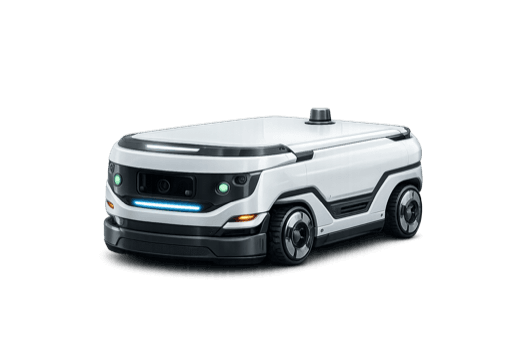
A warehouse runs people between fixed points all day. The walking is not the work, but it is most of the hours, and it scales linearly with volume in a building that cannot grow.
The robot has to share aisles with staff and forklifts, survive a floor that was poured for pallets rather than for wheels, and keep running across a shift without a charging ritual that costs more time than it saves.
Requirements are stated with the reason they exist. A requirement without a reason is a preference, and preferences are how a shortlist quietly becomes a recommendation.
Set by what already sits on your pallets and roll cages, not by what the robot can lift on paper.
A shift without a manual battery swap; anything less puts a person back in the loop.
Reflectors and floor tape become maintenance the day the layout changes, and the layout always changes.
The standard for driverless industrial trucks; without it the robot cannot legally share an aisle with staff.
One robot is a pilot. The economics only work at fleet scale, and fleets need someone to arbitrate intersections.
These are not weaknesses to trade off against a high score. Any one of them ends the conversation, which is why they sit outside the scoring entirely.
Shipping robots in our catalogue whose class matches this job, listed under the industrial weighting so you can scan them — not a recommendation. The job is repetitive and uninterrupted, so uptime and serviceability decide the outcome long before cleverness does.
Order follows the industrial profile score. Requirements and disqualifiers above are editorial; they do not remove robots from this list. How the score works
Compare candidatesThis is the one job on this page that is genuinely solved. Thousands of units run in production, integrators know how to size a fleet, and the failure mode is a bad WMS integration rather than a robot that cannot do the work. The remaining risk is commercial, not technical.