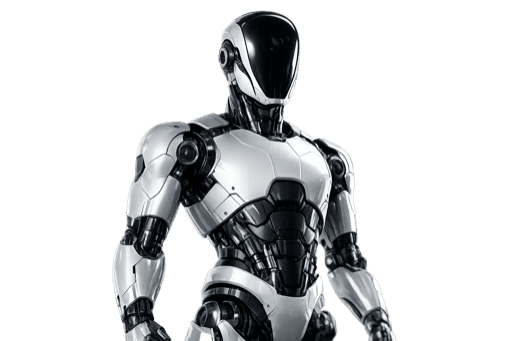
Every job above was won by a machine specialised for it. The humanoid argument is the opposite one: the building, the totes, the stairs and the shelves were all designed around a human body, and a machine with that body can be pointed at a new task without re-engineering the site.
That argument is sound and, for now, unproven at volume. The tasks being trialled are the narrowest ones — moving a tote from a conveyor to a rack — which is also the task a purpose-built machine already does more cheaply.
Requirements are stated with the reason they exist. A requirement without a reason is a preference, and preferences are how a shortlist quietly becomes a recommendation.
A full tote. Peak lift on a datasheet is not the same as lifting it every forty seconds all shift.
Published runtimes are measured walking, not carrying; the gap between the two is where this class is quietly weakest.
Nothing in this class has a collaborative certification today, so deployments are fenced — which forfeits the flexibility that was the argument for buying one.
Handling one known tote is a fixture problem. Handling whatever arrives is the actual job.
A bipedal machine will fall. Whether that is an incident or an inconvenience decides if it can work near people.
These are not weaknesses to trade off against a high score. Any one of them ends the conversation, which is why they sit outside the scoring entirely.
Shipping robots in our catalogue whose class matches this job, listed under the industrial weighting so you can scan them — not a recommendation. Judged against deployment rather than demonstration, which is exactly where this class is weakest and where the gap is worth showing.
Order follows the industrial profile score. Requirements and disqualifiers above are editorial; they do not remove robots from this list. How the score works
Compare candidatesThese are kept off the candidate list rather than mixed into it. A candidate list is something you can act on, and hardware nobody can order does not belong on one.
NEURA Robotics
NEURA Robotics
Hexagon
AKINROBOTICS
Boston Dynamics
Xiaomi
Dobot
Holiday Robotics
Figure AI
Figure AI
Generative Bionics
Humanoid
XPENG Robotics
Weave Robotics
PAL Robotics
KEENON Robotics
KEENON Robotics
Leju Robotics
Kawasaki Robotics
Robot Era
Matrix Robotics
Matrix Robotics
Mentee Robotics
1X Technologies
Tesla
EngineAI
Pudu Robotics
Pudu Robotics
UniX AI
Sanctuary AI
PrimeBOT
PrimeBOT
LimX Dynamics
Tokyo Robotics
UBTECH Robotics
The gap between what is shown and what is deployed is wider here than anywhere else on the site, which is why our scoring is harsh on this class: several of these robots score in the forties not because the engineering is poor but because almost nothing about them is published, and we would rather understate a machine than repeat a launch video. Expect this page to change fastest.