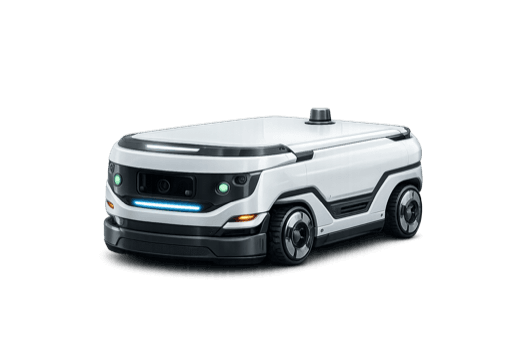
A fulfilment centre pays people to walk. As order lines rise, walking dominates the hours and error rates follow fatigue. Goods-to-person and zone AMRs attack that waste without pouring a new sortation system.
The system problem is traffic and software, not a single robot. Ten units that cannot share aisles or talk to the WMS are a very expensive cart fleet.
Requirements are stated with the reason they exist. A requirement without a reason is a preference, and preferences are how a shortlist quietly becomes a recommendation.
Undersizing here forces half-loads and kills the pick-rate model the ROI was built on.
Manual battery swaps put labour back into the loop you were removing.
Layouts change every peak season; tape and reflector farms do not.
One AMR is a demo. Payback assumes a density the FMS must actually arbitrate.
Shared aisles need a published safety case, not a brochure claim.
These are not weaknesses to trade off against a high score. Any one of them ends the conversation, which is why they sit outside the scoring entirely.
Shipping robots in our catalogue whose class matches this job, listed under the industrial weighting so you can scan them — not a recommendation. Fleet uptime and integratability decide whether the project scales past the pilot aisle.
Order follows the industrial profile score. Requirements and disqualifiers above are editorial; they do not remove robots from this list. How the score works
Compare candidatesThe most commercially proven mobile robotics job after pallet AMR transport. It still fails when buyers treat robots as forklifts with better PR and ignore software, charging topology and change management. The winners usually buy a system, not a chassis.