Campuses and closed communities generate constant short deliveries. Golf carts and couriers absorb the demand poorly at peak, and fixed pneumatic or conveyor systems do not exist for most sites.
The robot must handle kerbs, slopes, doors and curious bystanders — then hand off cleanly. A vehicle that cannot complete the last door interaction is a mobile storage box.
Requirements are stated with the reason they exist. A requirement without a reason is a preference, and preferences are how a shortlist quietly becomes a recommendation.
Campus maps lie; the concrete lip at every doorway is the real test.
Rain is when food delivery peaks on some sites.
Open bins invite theft and kill food programmes.
A robot that freezes in a roadway when LTE drops is a liability.
One drop per charge never beats a bicycle courier.
These are not weaknesses to trade off against a high score. Any one of them ends the conversation, which is why they sit outside the scoring entirely.
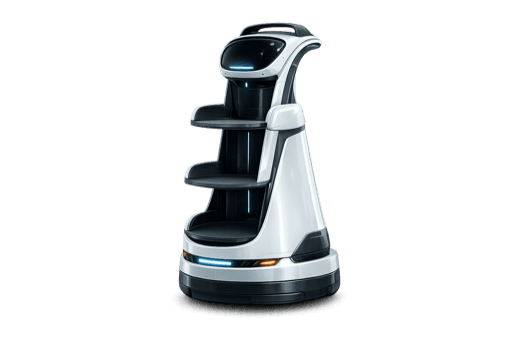
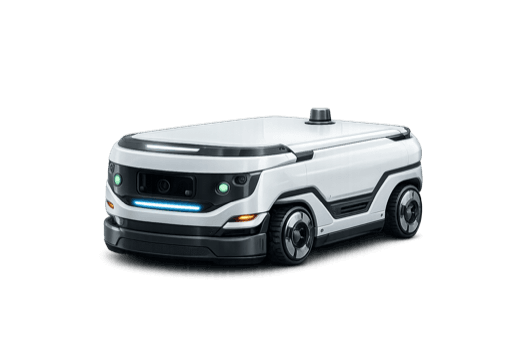
Shipping robots in our catalogue whose class matches this job, listed under the industrial weighting so you can scan them — not a recommendation. Outdoor reliability and recovery under unsupervised routes dominate.
Order follows the industrial profile score. Requirements and disqualifiers above are editorial; they do not remove robots from this list. How the score works
Compare candidatesVisible, photogenic and regulated. Sidewalk rules, VFOG concerns and building access control slow scale more than autonomy papers admit. Working deployments tend to be closed campuses with facilities ownership, not open-city sidewalks.